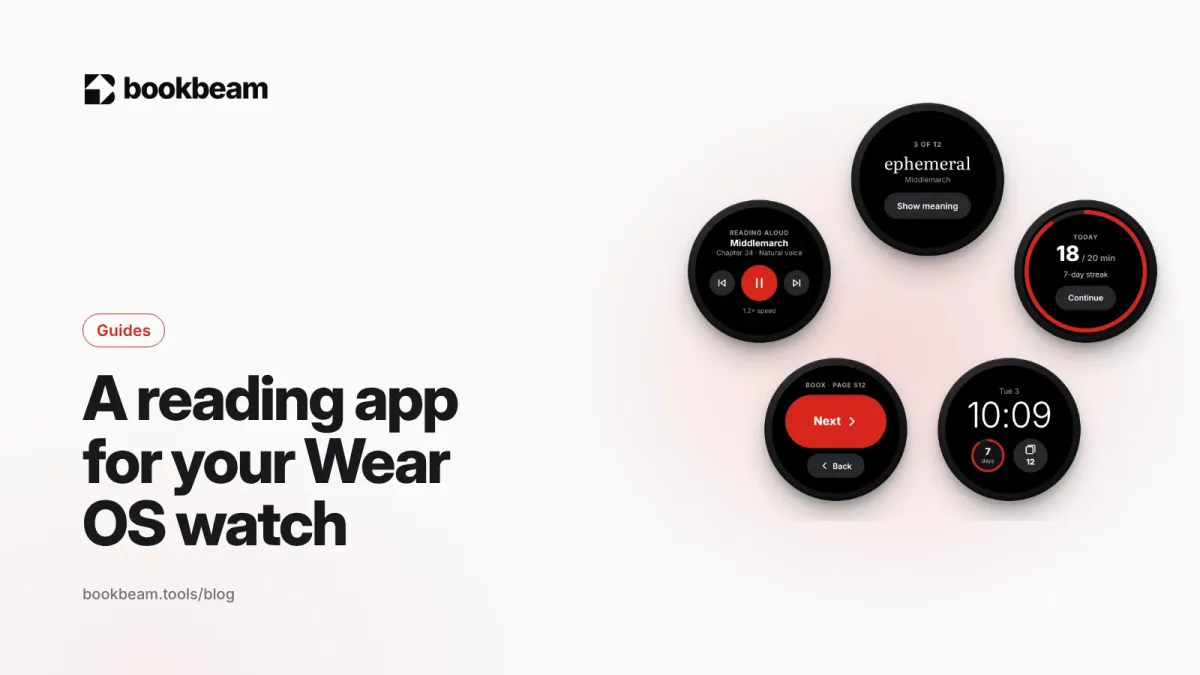
A watch is too small for reading, but just right for the bits around it: a quick flashcard review, a glance at today's goal, pausing the voice reading your book. Here's what Bookbeam does on Wear OS and how to set it up.
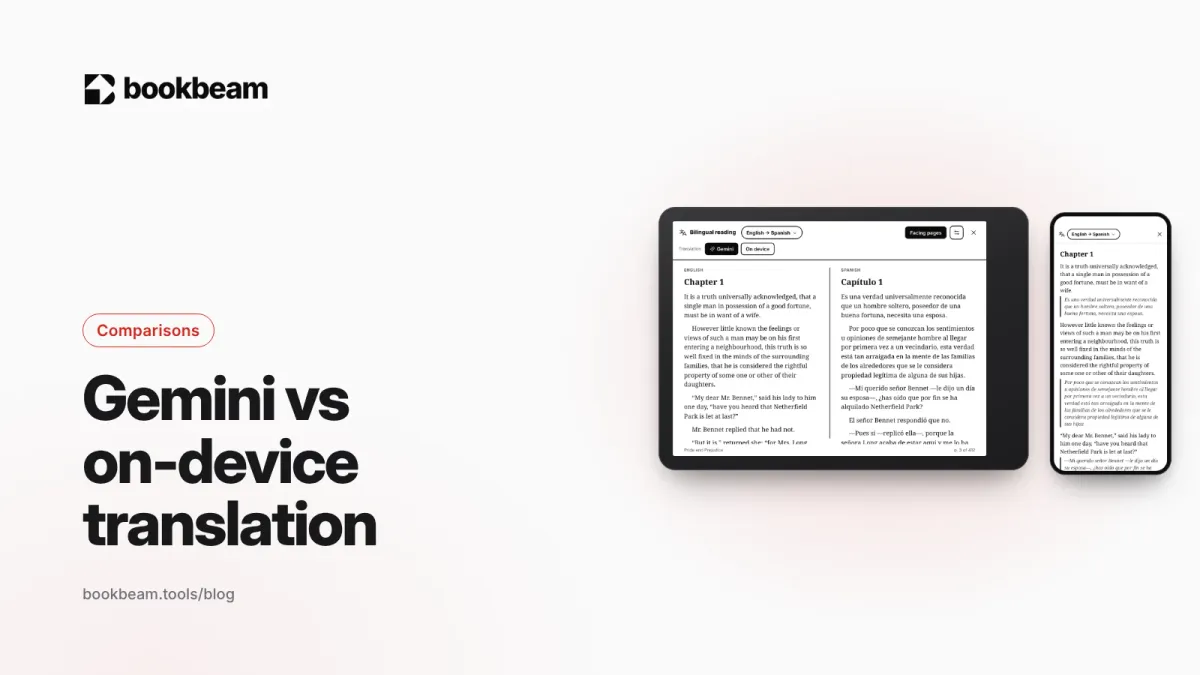
Bookbeam can translate books on your device or with Gemini. We compare the two on quality, offline use, speed, privacy and price, and explain when each one is the better choice.
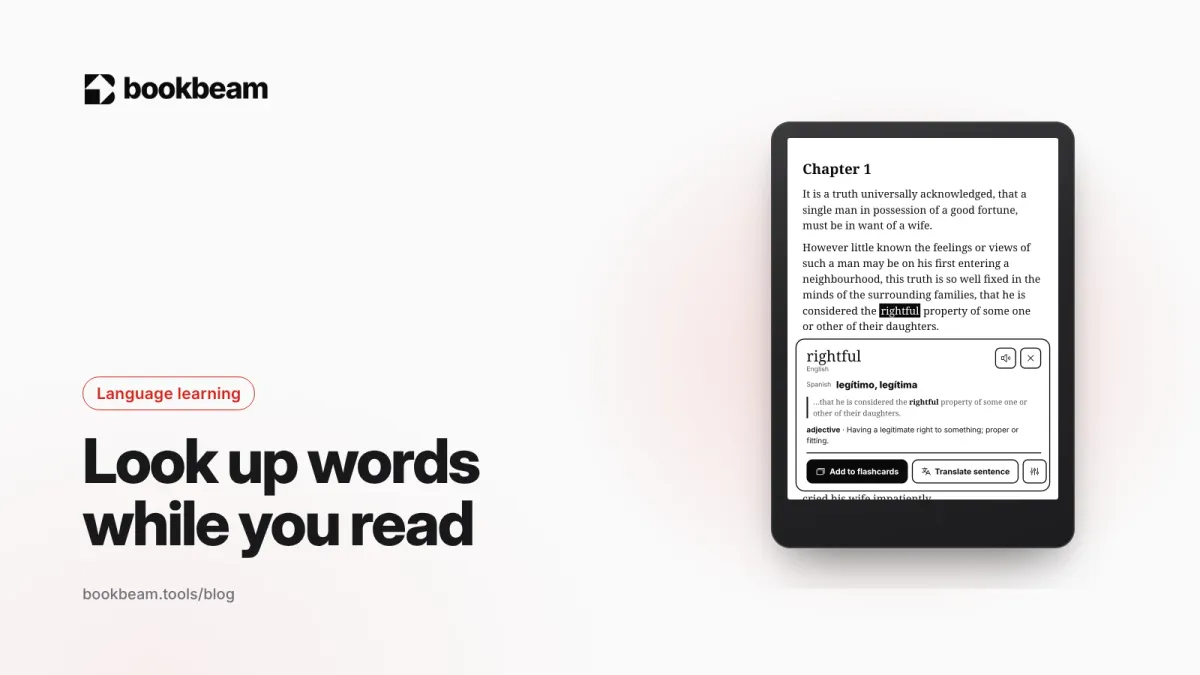
Stopping to look up a word shouldn't mean leaving the book. Here's how to get a word's meaning, its translation in context and its pronunciation in one tap, translate a whole sentence, and keep the words as flashcards.
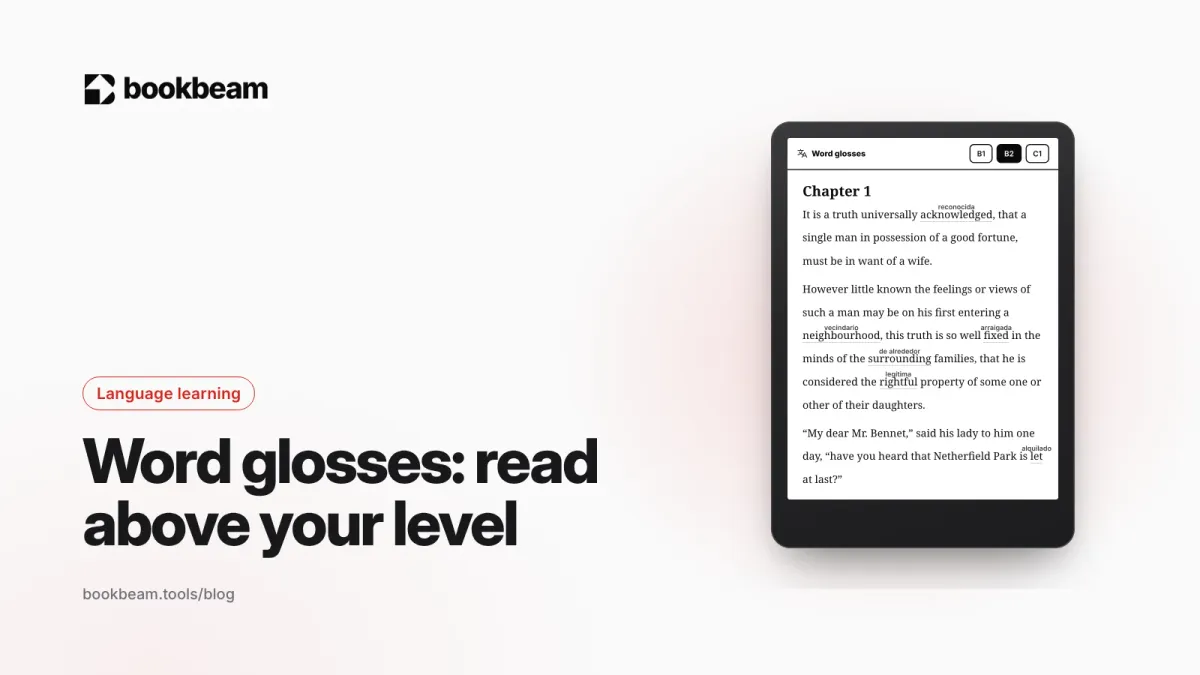
Word glosses put a small translation above just the words that are likely new to you, in the sense they have in that sentence. Here's why glossing helps you learn, how to pick your level, and how glosses work in Bookbeam.
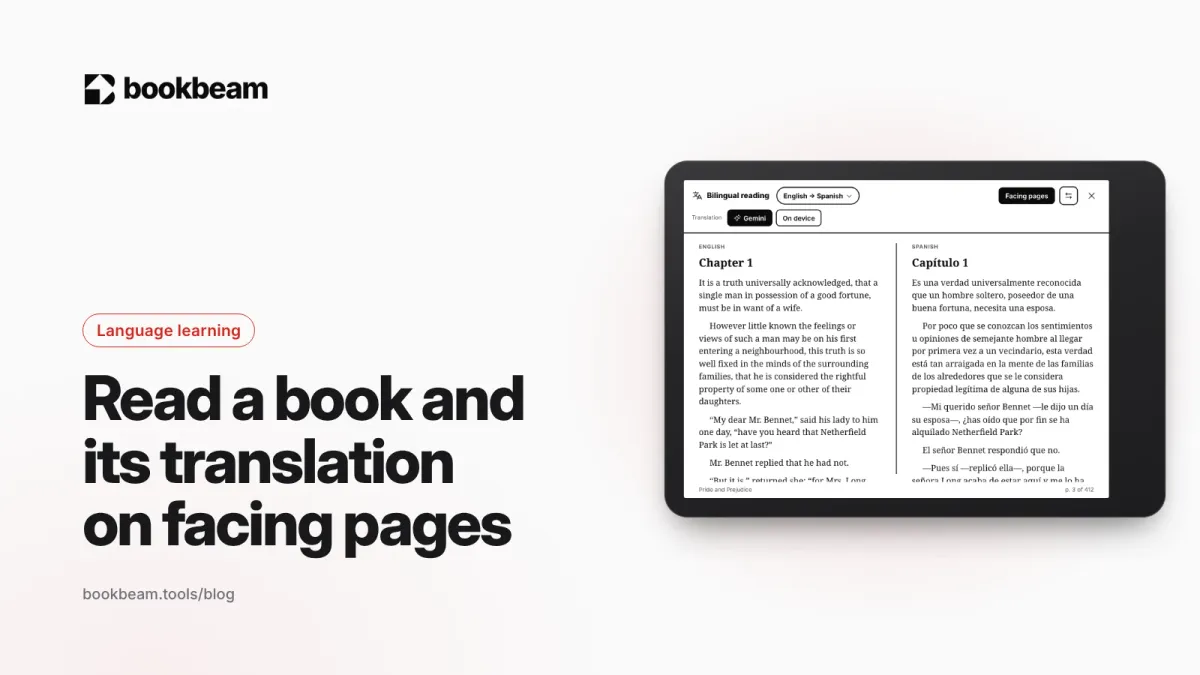
Turn your tablet sideways and read like a parallel-text edition: the original on one page, the translation on the other. Here's how facing pages work, when they beat a translation under each paragraph, and how to set them up.
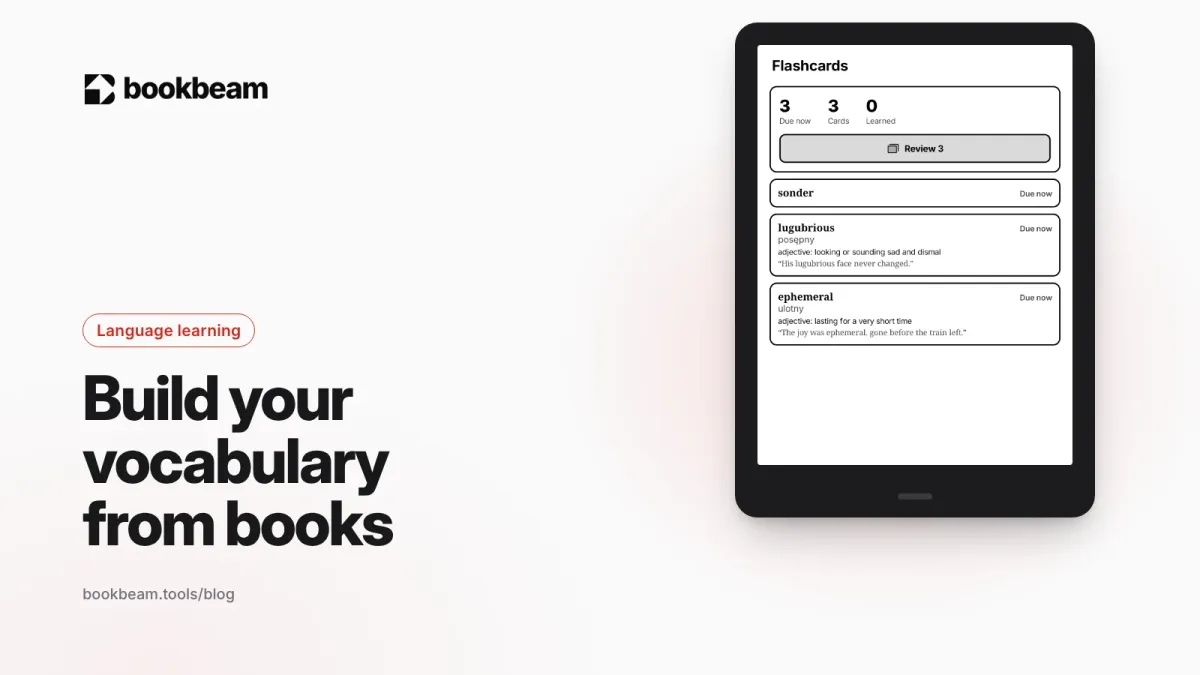
Reading builds vocabulary, but slowly: most words need many encounters to stick. Here's what research says, how to pick which words to save, how to make better flashcards, and a 20-minute daily routine.
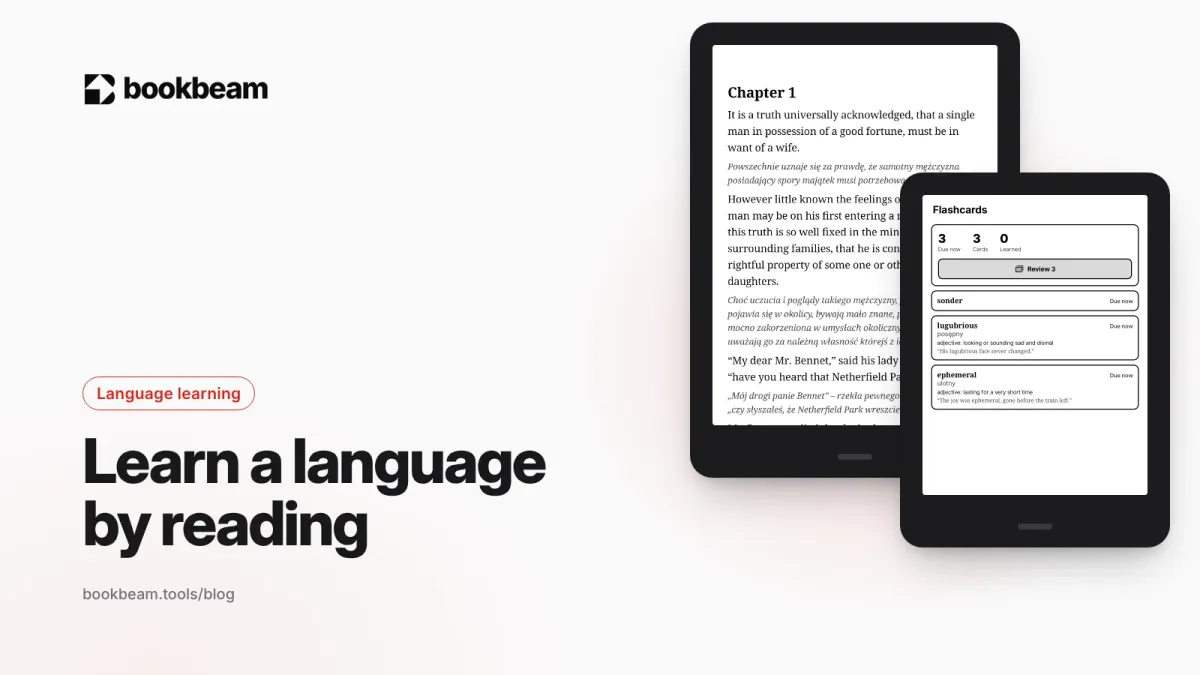
Reading is one of the best ways to learn a language, if you read the right books the right way. Here's what the research says about vocabulary and repetition, a simple daily routine, and the tools that make it easier.
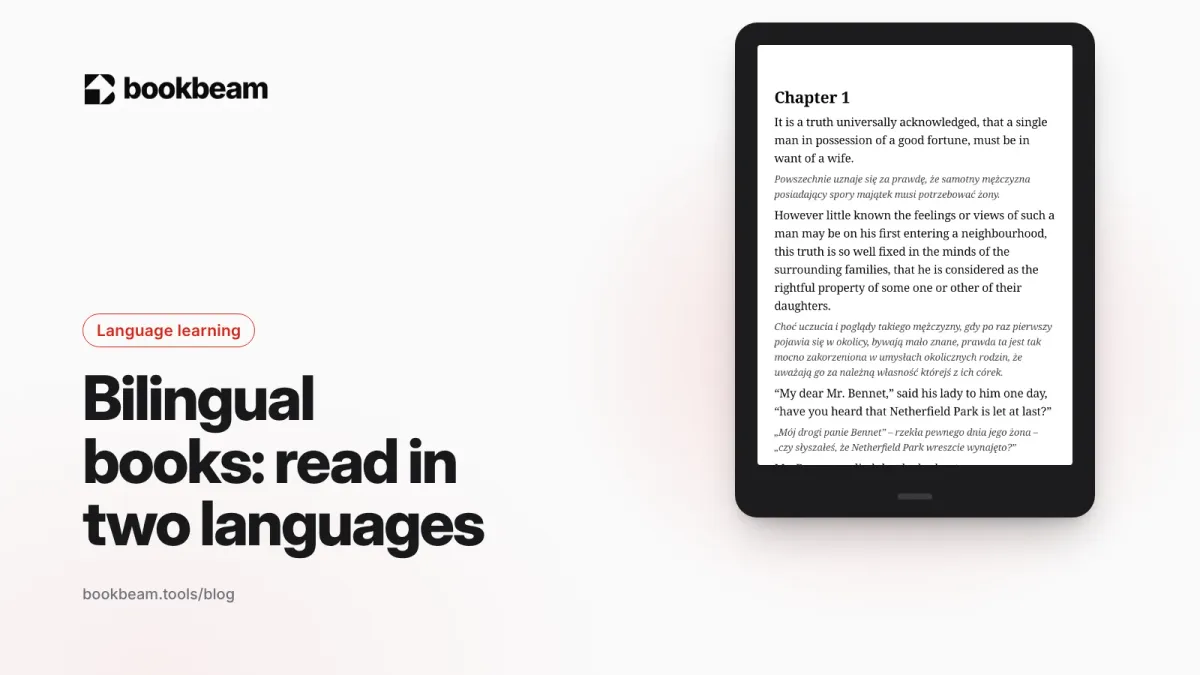
Parallel texts and paragraph-by-paragraph translations let you read real books in a language you're still learning. Here's what the research says, a method that works, and how to set it up on Android and e-ink readers.
